
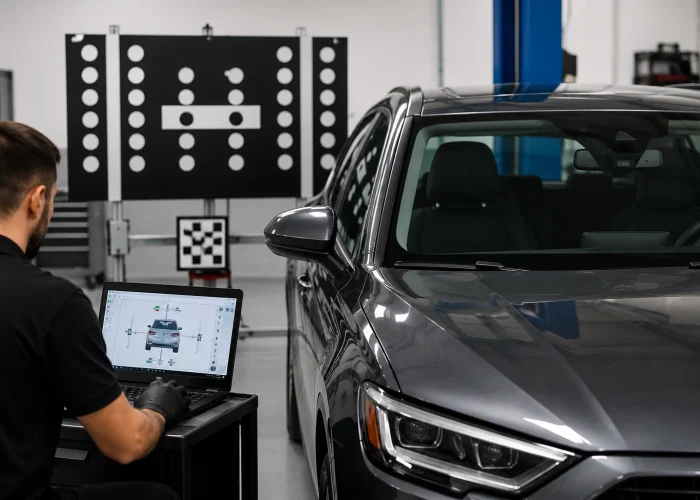
Modern vehicles are smarter and safer than ever before. Many newer cars, trucks, and SUVs now include cameras, sensors, and advanced safety features designed to help drivers avoid accidents and stay aware of their surroundings. These technologies, known collectively as Advanced Driver Assistance Systems (ADAS), often rely on components mounted near or directly behind the windshield.
Because of this, replacing a windshield involves more than simply installing a new piece of glass. In many cases, the cameras and sensors associated with these safety systems must be carefully calibrated to ensure they continue functioning correctly.
If you’ve recently had a windshield replaced—or are planning to schedule a replacement—you may have heard the term “ADAS calibration” and wondered whether it applies to your vehicle.
This ADAS calibration guide explains what these systems do, why windshield calibration matters, which vehicles commonly require it, and how proper calibration helps keep you safe on the road. Whether you’re driving through Covington, Conyers, or anywhere throughout Newton County, understanding ADAS technology can help you make informed decisions about your vehicle’s safety systems.
What Is ADAS?
ADAS stands for Advanced Driver Assistance Systems.
These are electronic safety technologies designed to help drivers avoid collisions, stay in their lane, monitor traffic conditions, and improve overall driving safety.
Common ADAS features include:
- Lane Departure Warning
- Lane Keep Assist
- Forward Collision Warning
- Automatic Emergency Braking
- Adaptive Cruise Control
- Traffic Sign Recognition
- Blind Spot Monitoring
- Driver Attention Monitoring
These systems work continuously while you drive, collecting information from cameras, sensors, radar units, and other electronic components.
Many drivers use these features every day without realizing how much technology is working behind the scenes.
How ADAS Systems Work
ADAS systems rely on a network of components that constantly monitor the vehicle’s surroundings.
These components may include:
- Forward-facing cameras
- Radar sensors
- Ultrasonic sensors
- LiDAR systems (on select vehicles)
- Electronic control modules
One of the most important components is often the forward-facing camera mounted near the rearview mirror.
This camera helps support features such as:
- Lane departure warning calibration
- Forward collision warning calibration
- Adaptive cruise control calibration
- Traffic sign recognition
- Automatic emergency braking
The camera must be positioned precisely according to manufacturer specifications. Even slight changes can affect how the system interprets road markings, vehicles, pedestrians, and other objects.
Because the camera is frequently attached to or viewed through the windshield, windshield replacement can impact system accuracy.
Why Windshield Replacement Can Affect ADAS Systems
Many vehicle owners assume a windshield replacement is simply a glass installation.
In reality, modern windshields have become an important part of the vehicle’s safety technology.
When a windshield is removed and replaced, several factors may affect camera and sensor alignment:
- Camera mounting position
- Windshield thickness
- Glass manufacturing tolerances
- Installation positioning
- Sensor orientation
Even a small shift in camera alignment can impact how the vehicle interprets what it sees.
For example, a camera that is slightly misaligned may:
- Read lane markings incorrectly
- Misjudge following distances
- Delay warning notifications
- Affect braking system response
This is why ADAS windshield calibration is often recommended or required following windshield replacement and calibration procedures.
If your vehicle requires a new windshield, working with professionals experienced in Windshield Replacement helps ensure both the glass and safety systems are properly addressed.
What Happens If ADAS Calibration Is Not Performed?
Skipping calibration doesn’t necessarily mean a system will stop working completely.
However, it may not perform as accurately as intended by the manufacturer.
Potential issues include:
Incorrect Lane Departure Alerts
Your vehicle may incorrectly detect lane markings or fail to provide warnings when needed.
False Collision Warnings
Drivers may experience unnecessary alerts even when no hazard exists.
Reduced Automatic Braking Accuracy
Automatic emergency braking systems may react too early, too late, or not as expected.
Adaptive Cruise Control Issues
Distance calculations between vehicles may become inaccurate.
Driver Confidence Concerns
Many drivers rely on these safety features daily. When calibration is skipped, confidence in the system’s performance may be reduced.
Proper windshield calibration helps ensure these advanced safety features operate as designed.
Which Vehicles Commonly Require ADAS Calibration?
ADAS technology has become increasingly common across many vehicle brands.
Manufacturers frequently requiring calibration after windshield replacement include:
- Honda
- Toyota
- Ford
- Chevrolet
- Hyundai
- Kia
- Nissan
- Subaru
- BMW
- Mercedes-Benz
- Tesla
- Volkswagen
- Audi
Vehicle requirements vary based on:
- Make
- Model
- Trim level
- Model year
- Installed safety packages
A 2015 vehicle may have different requirements than a 2024 version of the same model.
This is one reason professional technicians verify manufacturer procedures before completing windshield replacement and calibration services.
Types of ADAS Calibration
Not all vehicles use the same calibration process.
Manufacturers may require static calibration, dynamic calibration, or a combination of both.
Static Calibration
Static calibration is performed indoors using specialized equipment.
The process may involve:
- Calibration targets
- Laser measuring tools
- Computerized diagnostic equipment
- Controlled lighting conditions
Technicians position the vehicle according to manufacturer specifications and adjust system settings to achieve proper alignment.
Dynamic Calibration
Dynamic calibration occurs while driving.
The vehicle gathers information from road conditions and calibrates itself under specific circumstances.
Requirements may include:
- Driving at certain speeds
- Clearly visible lane markings
- Specific road types
- Manufacturer-defined procedures
Combined Calibration
Some vehicles require both static and dynamic calibration.
In these cases, the vehicle undergoes an initial shop-based calibration followed by a driving-based verification process.
Signs Your Vehicle May Need ADAS Calibration
Windshield replacement is one of the most common reasons for calibration, but it is not the only one.
Your vehicle may need calibration if you have recently experienced:
- Windshield replacement
- Collision repairs
- Front-end repairs
- Camera replacement
- Radar sensor replacement
- Suspension modifications
- Wheel alignment adjustments
- Airbag deployment
Warning indicators may also appear on the dashboard.
If you notice unusual behavior from lane assist, collision warning systems, or adaptive cruise control features, a professional inspection may be necessary.
Drivers considering whether calibration is necessary after glass replacement can learn more in Do You Need Calibration After Windshield Replacement?
Does Every Windshield Replacement Require Calibration?
No.
Not every windshield replacement requires calibration.
Several factors determine whether calibration is necessary:
Vehicle Age
Older vehicles may not have ADAS technology installed.
Safety Equipment
Some vehicles include forward-facing cameras while others do not.
Manufacturer Requirements
Certain manufacturers require calibration whenever the windshield is replaced, even if no warning lights appear.
Sensor Location
Some systems rely on windshield-mounted cameras, while others use alternative sensor locations.
The safest approach is to verify manufacturer recommendations whenever a windshield replacement occurs.
Can ADAS Calibration Be Performed With Mobile Windshield Replacement?
In many cases, yes.
However, the answer depends on the vehicle and calibration requirements.
Some vehicles can be calibrated successfully during a Mobile Auto Glass appointment when conditions meet manufacturer guidelines.
Other vehicles may require:
- Controlled lighting
- Specialized targets
- Indoor calibration bays
- Additional diagnostic equipment
Because requirements vary significantly, technicians typically evaluate each vehicle individually.
Drivers interested in understanding the benefits of mobile service versus shop service may find helpful information in Mobile vs Shop Auto Glass Repair.
How Much Does ADAS Calibration Cost?
Calibration costs vary considerably depending on the vehicle.
Factors affecting cost include:
- Vehicle make and model
- Number of cameras
- Number of sensors
- Calibration method required
- Manufacturer specifications
- Diagnostic requirements
Luxury vehicles and vehicles equipped with multiple ADAS systems often require more extensive calibration procedures.
Because requirements vary, obtaining a professional estimate is usually the best way to understand potential costs.
For additional information about replacement-related expenses, review the Windshield Replacement Cost Blog.
Will Insurance Cover ADAS Calibration?
In many situations, insurance coverage may help pay for ADAS calibration when it is part of a covered windshield replacement claim.
Coverage depends on:
- Insurance carrier
- Policy type
- Deductibles
- State regulations
- Comprehensive coverage terms
Because ADAS calibration may be considered part of restoring the vehicle to manufacturer specifications, some insurance policies include it when associated with a covered windshield claim.
Drivers with questions about claims and coverage can review our Insurance Blog for additional guidance.
Windshield Replacement & ADAS Calibration in Covington, GA
As vehicle technology continues to evolve, drivers throughout Covington and Conyers increasingly depend on ADAS features every day.
Whether you’re commuting along I-20, traveling through Downtown Covington, or heading toward the Georgia International Horse Park near Conyers, properly functioning safety systems help support a safer driving experience.
At Covington Autoglass, we understand that modern windshield replacement involves more than replacing damaged glass.
Our team works with vehicles equipped with advanced safety technologies and helps drivers understand when windshield camera calibration may be required.
Benefits include:
- Free estimates
- Mobile service availability
- Same-day appointments when available
- Assistance with insurance claims
- Modern vehicle expertise
- Service throughout Newton County and surrounding areas
Drivers searching for local auto glass assistance can learn more about services available in Covington and Conyers.
Why Proper Calibration Matters for Driver Safety
ADAS technology is designed to help drivers make safer decisions.
However, these systems depend on accurate information.
Proper calibration helps ensure:
- Cameras see the road correctly
- Sensors communicate accurately
- Safety alerts function properly
- Braking systems respond appropriately
- Adaptive cruise control performs as intended
Manufacturers invest significant engineering resources into these systems because accuracy matters.
When calibration is performed correctly, drivers gain confidence that their vehicle’s safety features are operating according to manufacturer specifications.
Likewise, understanding whether damage requires repair or replacement can help vehicle owners make informed decisions. Learn more in our Repair vs Replacement Blog.
Frequently Asked Questions
What is ADAS calibration?
ADAS calibration is the process of adjusting vehicle cameras and sensors to manufacturer specifications so advanced safety systems function correctly.
Do all windshields require calibration?
No. Calibration requirements depend on the vehicle’s safety equipment and manufacturer recommendations.
How long does ADAS calibration take?
The process varies by vehicle. Some calibrations take less than an hour, while others may require additional time.
Can I drive without calibration?
The vehicle may still operate, but safety systems may not perform as accurately as intended.
Is calibration covered by insurance?
Many insurance policies may provide coverage when calibration is associated with a covered windshield replacement claim.
What vehicles require calibration?
Many newer Honda, Toyota, Ford, Hyundai, Kia, Subaru, BMW, Mercedes-Benz, Tesla, and Chevrolet vehicles may require calibration.
What happens if calibration is skipped?
Lane assist, collision warnings, adaptive cruise control, and other ADAS features may not function properly.
Can calibration be performed at my home?
Some vehicles can be calibrated during mobile service appointments, while others require specialized shop equipment.
Does calibration affect lane assist?
Yes. Proper calibration helps ensure lane departure warning and lane keep assist systems function correctly.
Does calibration affect collision warning systems?
Yes. Forward collision warning and automatic emergency braking systems often rely on properly calibrated cameras and sensors.
Get a Free Windshield Replacement Quote Today
If your vehicle needs windshield replacement, don’t overlook the importance of proper ADAS calibration.
Modern safety systems are designed to help protect you, your passengers, and everyone else on the road. Ensuring those systems are calibrated correctly after glass replacement helps maintain the performance your manufacturer intended.
Covington Autoglass proudly serves drivers throughout Covington, Conyers, Newton County, and surrounding communities with:
- Free estimates
- Mobile service available
- Same-day appointments when available
- Insurance claim assistance
- Modern vehicle expertise
- Professional windshield replacement services
Whether you’re dealing with a cracked windshield, a damaged camera-equipped windshield, or questions about calibration after replacement, our team is here to help.
Call today for a free quote and learn more about safe, professional windshield replacement and ADAS calibration services.